
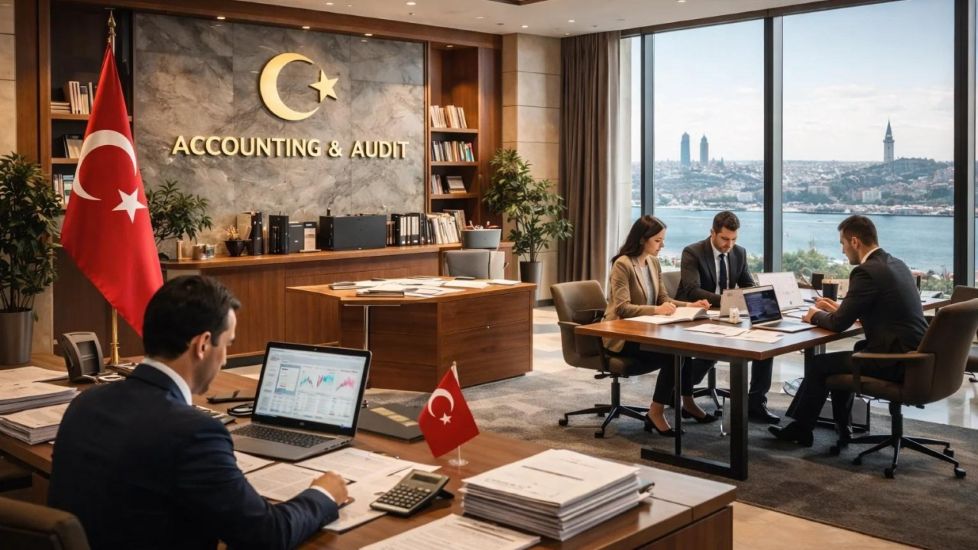
Turkey has become an increasingly interesting destination for foreign professionals looking for career opportunities in finance, accounting, business administration, and related fields. The country’s large private sector, growing international trade, expanding service industry, and strong connection with European and Middle Eastern markets have created demand for professionals with accounting and financial expertise.
For international candidates, Accountant Jobs in Turkey can be found across manufacturing companies, international corporations, accounting firms, tourism businesses, construction companies, technology companies, and export-oriented businesses. However, foreign professionals need to understand the local accounting system, employment regulations, language requirements, and work permit procedures before applying.
This guide explains the most important aspects of Accountant Jobs in Turkey, including career opportunities, salaries, requirements, skills, work permits, and strategies for finding employment as a foreign accountant.
Why Are Accountant Jobs in Turkey Attractive to Foreign Professionals?
Turkey has one of the largest economies in its region and maintains significant commercial relationships with European, Asian, and Middle Eastern markets. This makes financial management and accounting important functions for both domestic and international businesses.
Foreign accountants may have an advantage when applying to companies that work with international clients, foreign investors, multinational organizations, or cross-border transactions. Knowledge of international accounting standards, financial reporting, taxation, and foreign languages can make a candidate more competitive.
Another advantage is the diversity of employers. Professionals searching for Accountant Jobs in Turkey are not limited to traditional accounting firms. They can explore opportunities in manufacturing, logistics, banking, tourism, e-commerce, technology, construction, retail, and international trade.
7 Best Accountant Jobs in Turkey for Foreign Professionals
The Turkish employment market includes several accounting positions suitable for professionals with different levels of experience. The following table presents some of the most common opportunities.
| Position | Typical Responsibilities | Suitable Candidates |
|---|---|---|
| General Accountant | Bookkeeping, financial records and reporting | Junior to senior accountants |
| Senior Accountant | Financial reporting and accounting supervision | Experienced accountants |
| Financial Accountant | Financial statements and reporting | Finance professionals |
| Tax Accountant | Tax calculations and compliance | Tax specialists |
| Management Accountant | Budgets and internal financial analysis | Experienced professionals |
| Accounts Payable Specialist | Supplier invoices and payments | Junior and mid-level professionals |
| Accounts Receivable Specialist | Customer payments and receivables | Accounting professionals |
The right position depends on your education, professional experience, language skills, and familiarity with Turkish accounting regulations.
General Accountant Jobs in Turkey
General accounting positions are among the most common opportunities available to international professionals. General accountants typically work with financial transactions, invoices, bookkeeping, bank reconciliations, expense records, and financial documentation.
Employers may expect candidates to have an accounting degree or a related qualification. Practical experience with accounting software can also significantly improve employment prospects.
Foreign applicants looking for Accountant Jobs in Turkey should understand that knowledge of Turkish accounting procedures can be particularly important for positions involving local tax filings and statutory reporting.
Senior Accountant Jobs in Turkey
Senior accountants generally have greater responsibility than entry-level accounting professionals. Their duties may include preparing financial statements, reviewing accounting records, supervising junior employees, managing month-end closing procedures, and communicating with auditors.
International companies may be particularly interested in accountants who have experience with international financial reporting, multinational operations, or cross-border transactions.
For senior-level Accountant Jobs in Turkey, employers often place greater emphasis on professional experience than on academic qualifications alone. Strong analytical skills, attention to detail, and experience with accounting software can make a significant difference.
Tax Accountant Jobs in Turkey
Tax accounting is another important area of employment. Businesses operating in Turkey need professionals who understand taxation requirements and can maintain accurate financial records.
Tax accountants may be responsible for preparing tax-related documentation, monitoring deadlines, reviewing transactions, and supporting companies during tax audits or inspections.
For foreign professionals, tax accounting can be more challenging because Turkish tax regulations and administrative procedures differ from those in other countries. Candidates with experience working with Turkish businesses or international tax environments may therefore have stronger opportunities.
Financial Accountant Jobs in Turkey
Financial accountants focus heavily on financial reporting and the preparation of financial information for management, shareholders, investors, and other stakeholders.
Typical responsibilities include preparing financial statements, recording transactions, reconciling accounts, analyzing financial data, and supporting audits.
Candidates with knowledge of International Financial Reporting Standards can be particularly attractive to multinational companies. International experience can also help applicants compete for higher-level Accountant Jobs in Turkey.
Management Accounting Opportunities
Management accountants have a slightly different role from traditional financial accountants. Their work focuses more on helping managers make business decisions.
They may prepare budgets, analyze costs, monitor financial performance, forecast revenues, and evaluate business projects. These professionals need strong analytical and communication skills because they frequently work with managers from different departments.
Foreign professionals with experience in financial planning and analysis, budgeting, or business intelligence may find management accounting positions particularly suitable.
Accounts Payable and Accounts Receivable Jobs
Accounts payable and accounts receivable positions can provide entry points into the Turkish accounting market.
Accounts payable specialists generally manage supplier invoices, payment records, and vendor accounts. Accounts receivable specialists focus on customer invoices, outstanding payments, collections, and account reconciliation.
These positions may require less senior-level experience than management accounting or senior accountant roles. They can therefore be useful options for professionals who are building international work experience.
Average Salaries for Accountants in Turkey
Salaries for accounting professionals vary considerably depending on experience, location, employer, industry, qualifications, and language skills. Istanbul generally offers a wider range of professional opportunities and salaries because it is Turkey’s largest commercial and financial center.
The following table provides a general overview rather than fixed salary figures.
| Experience Level | Potential Salary Position |
|---|---|
| Entry-Level Accountant | Junior accounting roles |
| Mid-Level Accountant | General and financial accounting |
| Senior Accountant | Senior and supervisory positions |
| Accounting Manager | Management and leadership positions |
| Specialized Accountant | Tax, international accounting or financial analysis |
Salary expectations should always be evaluated against inflation, exchange rates, benefits, working hours, and the cost of living in the specific Turkish city.
Professionals with international accounting experience, advanced Excel skills, ERP expertise, and foreign-language abilities may have better negotiating power when applying for Accountant Jobs in Turkey.
Which Skills Do Turkish Employers Expect?
Technical accounting knowledge is important, but employers often evaluate a combination of technical and professional skills.
Candidates should ideally have experience with bookkeeping, financial reporting, account reconciliation, budgeting, financial analysis, and accounting software. Advanced Excel knowledge is also highly valuable in many accounting positions.
Knowledge of ERP platforms such as SAP or similar enterprise systems can be an advantage, particularly for professionals targeting large corporations.
Soft skills also matter. Employers may look for accuracy, organization, communication, problem-solving, time management, and the ability to work under financial reporting deadlines.
Is Turkish Language Required for Accountant Jobs?
Language requirements depend heavily on the employer and position. Turkish can be important for accountants working with local clients, Turkish tax authorities, domestic suppliers, and Turkish-language financial documentation.
However, international companies may advertise accounting positions where English is the primary working language. This is particularly relevant for foreign professionals who have strong English skills but limited Turkish.
Learning Turkish can nevertheless expand the number of available Accountant Jobs in Turkey and make everyday professional communication easier.

Educational Requirements for Foreign Accountants
Most professional accounting positions require a bachelor’s degree in accounting, finance, economics, business administration, or a related field.
Employers may also consider professional certifications and previous work experience. Candidates with internationally recognized accounting qualifications can potentially strengthen their applications, especially when applying to multinational companies.
Before applying for jobs, foreign professionals should also check whether their educational credentials require recognition or additional documentation for the specific position.
Work Permit Requirements for Foreign Accountants
Foreign nationals generally need legal authorization to work in Turkey. In many employment situations, the employer plays an important role in the work permit application process.
A typical process can involve receiving a job offer, preparing required documents, submitting the relevant application, and waiting for the authorities to assess the application.
The exact requirements can vary depending on the applicant’s nationality, position, employer, residence status, and current Turkish immigration regulations. Therefore, candidates should verify the latest requirements before beginning the process.
For professionals combining Work Immigration with a career in accounting, understanding the work authorization process is an essential part of planning a move to Turkey.
How Can Foreign Professionals Find Accountant Jobs in Turkey?
Job-search websites, company career pages, recruitment agencies, and professional networking platforms are among the most useful channels for finding employment.
Foreign candidates should create an English CV and, where appropriate, a Turkish version. The CV should clearly describe accounting experience, qualifications, software skills, language abilities, and knowledge of international accounting standards.
Networking can also be valuable. Connecting with finance professionals and recruiters working in Turkey can help candidates discover vacancies that may not be widely advertised.
Applicants considering Accountant Jobs in Turkey should also research the company before applying. Understanding the employer’s industry and international operations can help candidates customize their CV and perform better during interviews.
Best Turkish Cities for Accounting Careers
Istanbul is generally one of the strongest destinations for accounting and finance professionals because of its concentration of multinational companies, banks, consulting firms, trading companies, and headquarters.
Ankara also offers professional opportunities because it is Turkey’s capital and an important center for government institutions and businesses.
Izmir is another potential destination, particularly for professionals interested in manufacturing, logistics, trade, and companies connected to international commerce.
| City | Accounting Career Potential |
|---|---|
| Istanbul | Very strong |
| Ankara | Strong |
| Izmir | Strong |
| Bursa | Strong in manufacturing |
| Antalya | Opportunities in tourism and services |
The best city depends on the candidate’s specialization and target industry rather than salary alone.
How to Improve Your Chances of Getting Hired
Foreign accountants should adapt their applications to the Turkish market instead of relying on a generic international CV.
Highlighting measurable professional achievements can be particularly effective. For example, candidates can describe how they improved financial reporting processes, reduced accounting errors, supported audits, managed large transaction volumes, or improved budgeting procedures.
It is also useful to emphasize software experience. Employers may value candidates who can work confidently with Excel, ERP systems, accounting platforms, and financial reporting tools.
Language skills should also be clearly presented. English can be especially useful for international businesses, while Turkish can significantly expand opportunities with local companies.
Accountant Jobs in Turkey for International Students and Graduates
International graduates who have studied accounting, finance, economics, or business in Turkey may have an advantage because they are already familiar with the country’s educational and business environment.
Graduates can initially target junior accounting positions, financial assistant roles, accounts payable positions, or accounts receivable positions. Gaining local experience can later help them move toward more specialized positions.
For students considering Study Immigration, studying finance or accounting in Turkey can therefore be connected to a longer-term professional career strategy. However, graduates must still comply with the applicable rules concerning employment and residence status.
Can Foreign Accountants Work for International Companies in Turkey?
Yes, international companies can offer attractive opportunities for foreign accounting professionals. Multinational businesses often need employees who understand international business practices and can communicate with overseas offices.
Foreign accountants may be particularly useful in companies that conduct cross-border transactions, import and export goods, or maintain relationships with international customers and suppliers.
Knowledge of international accounting principles, strong English skills, and experience with multinational reporting systems can therefore be valuable when applying for Accountant Jobs in Turkey.
Visa and Immigration Considerations
Finding a suitable accounting position is only one part of moving to Turkey for employment. Foreign professionals should also consider residence status, employment authorization, documentation, and other immigration requirements.
Candidates planning a move should organize their academic documents, employment records, passport information, CV, and other required paperwork before beginning the process.
If immigration support is required, Homa Immigration Agency can assist applicants in understanding the stages associated with Work Immigration, employment authorization, and Visa Application procedures.
Benefits of Working as an Accountant in Turkey
Working in Turkey can provide foreign accountants with valuable international experience. Professionals may gain exposure to Turkish businesses while also working with European, Middle Eastern, and Asian markets.
Another benefit is the diversity of industries. Accounting professionals can build careers in manufacturing, tourism, technology, construction, retail, logistics, banking, and international trade.
For ambitious professionals, gaining experience in a growing international market can also create opportunities for future career development beyond Turkey.
Challenges Foreign Accountants Should Consider
Despite the opportunities, foreign accountants should be aware of several challenges. The biggest may be adapting to Turkish accounting practices, taxation procedures, business culture, and language requirements.
Competition can also be significant, particularly for positions at international companies. Employers may prefer candidates who already understand the Turkish market.
Foreign professionals can reduce these challenges by learning Turkish, understanding local accounting regulations, gaining relevant certifications, and developing strong knowledge of international financial reporting.
Final Thoughts on Accountant Jobs in Turkey
Accountant Jobs in Turkey offer several opportunities for foreign professionals with accounting, finance, taxation, and financial analysis experience. The strongest candidates are usually those who combine technical accounting knowledge with software skills, language abilities, international experience, and an understanding of the Turkish business environment.
Istanbul, Ankara, Izmir, and Bursa can all provide opportunities, although the best destination depends on the candidate’s specialization and target industry. International companies may be especially attractive to foreign accountants because English and international accounting experience can be valuable.
Before accepting a position, applicants should carefully review salary conditions, employment contracts, work authorization requirements, and residence procedures. Proper preparation can make the transition to the Turkish employment market much easier.
For professionals planning Work Immigration to Turkey, understanding both the employment market and immigration process is essential. With appropriate qualifications, experience, and preparation, Accountant Jobs in Turkey can provide a practical pathway toward international career development.


