
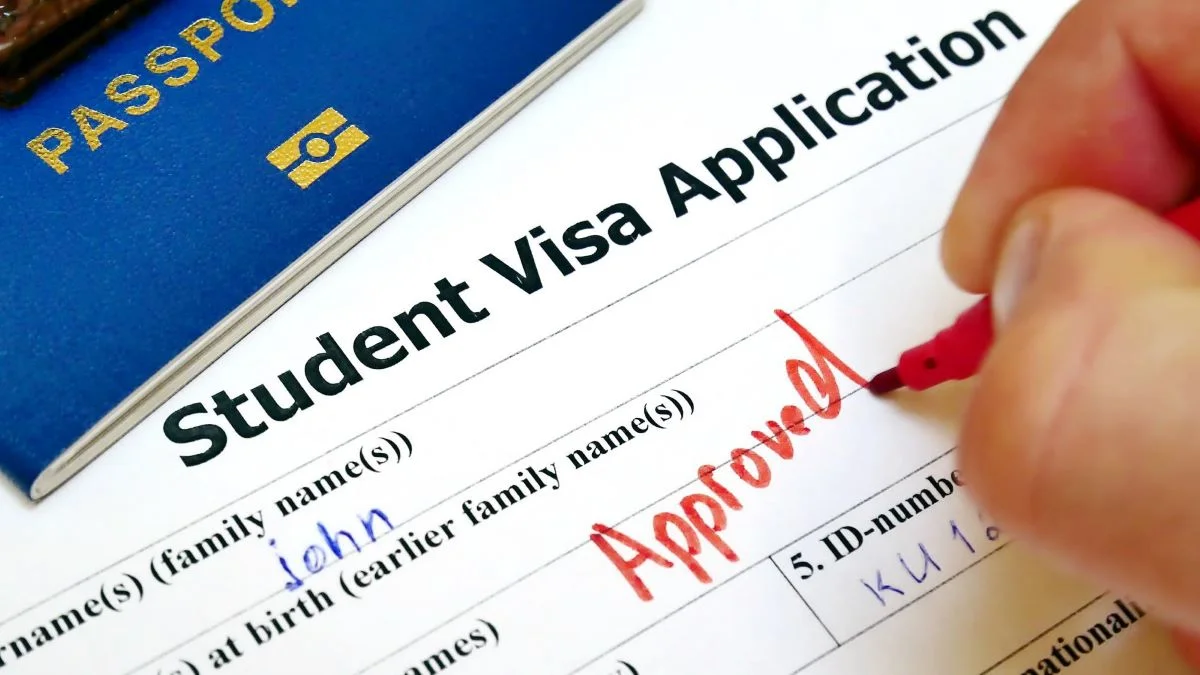
Turkey has become an attractive destination for international students because of its diverse university programmes, internationally oriented campuses and relatively accessible educational options. Students can choose from undergraduate, master’s and doctoral programmes in fields such as medicine, engineering, business, law and social sciences. However, before travelling to Turkey for their studies, many international applicants need to complete the Turkey Student Visa Application Process and prepare the documents required by Turkish authorities.
Understanding each stage can help students avoid delays, reduce the risk of submitting incomplete applications and prepare for university registration after arrival. The process generally involves obtaining admission, checking visa requirements based on nationality, preparing supporting documents, submitting a visa application through the appropriate Turkish mission or authorised application centre, and arranging travel.
It is also important to distinguish between a student visa and a student residence permit. A student visa is generally used to enter Turkey for educational purposes, while a student residence permit regulates the student’s stay in the country when required. These are separate procedures, and students should plan for both.
Who Needs a Turkish Student Visa?
Visa requirements depend on the applicant’s nationality, passport type, intended duration of stay and purpose of travel. Some foreign nationals may enter Turkey without a visa for certain periods, but visa exemption for tourism does not automatically mean that a person can enter for long-term study.
According to the Turkish Ministry of Foreign Affairs, electronic visas are intended for eligible tourism or commercial travel. Study generally requires the appropriate regular visa issued through a Turkish embassy or consulate. Applicants should therefore confirm the rules that apply to their nationality before making travel arrangements.
The Turkey Student Visa Application Process should begin with checking the official visa information provided by the Turkish diplomatic mission responsible for the applicant’s country of residence.
Step 1: Choose a University and Receive Admission
The first step is to secure admission to a recognised educational institution in Turkey. Applicants should research universities, compare programmes and check the academic and language requirements before submitting an application.
Depending on the institution and programme, students may need to provide:
- A valid passport
- Previous educational certificates
- Academic transcripts
- Proof of language proficiency, if required
- An entrance examination result, where applicable
- A motivation letter or other programme-specific documents
- Evidence of payment of an application fee, if applicable
Once the university accepts the application, it usually provides an official admission or acceptance letter. This document is central to the visa application because it demonstrates the educational purpose of the intended stay.
Students should check that the letter contains accurate information about their name, programme, institution and expected study period. Any discrepancy between the admission letter and passport can cause unnecessary complications.
Step 2: Check the Visa Requirements for Your Nationality
Before preparing the complete application, students should identify the exact requirements of the Turkish embassy or consulate responsible for their place of legal residence.
Although many student visa applications require similar documents, the details can vary. Some missions may request additional financial evidence, specific translations, proof of accommodation or other supporting documents.
Applicants should also verify whether they must submit their application directly to a diplomatic mission or through an authorised visa application centre. The Turkish Ministry of Foreign Affairs provides an official pre-application system for sticker visas, but applicants should follow the instructions issued for their specific location.
This step is particularly important for students applying from a country other than their country of citizenship. They may need to provide evidence of their legal residence in the country where they submit the application.
Step 3: Prepare the Required Documents
Preparing an organised application file is one of the most important parts of the Turkey Student Visa Application Process. Missing, inconsistent or outdated documents can lead to requests for additional information and may delay a decision.
The exact checklist should always be confirmed with the relevant Turkish mission. Commonly requested documents may include the following:
| Document | Purpose |
|---|---|
| Valid passport | Confirms identity and travel eligibility |
| Visa application form | Provides the applicant’s personal and travel information |
| University acceptance letter | Confirms admission and educational purpose |
| Passport-size photographs | Meets the applicable identification requirements |
| Proof of financial resources | Demonstrates the ability to cover study and living costs |
| Accommodation details | Supports the planned living arrangements, if requested |
| Health insurance documents | Provides evidence of coverage when required |
| Academic certificates | Supports the applicant’s educational background |
| Visa fee payment evidence | Confirms payment where applicable |
| Additional documents | Meets nationality-specific or consular requirements |
Not every applicant will need every item listed above, and the Turkish authorities may request additional evidence. Students should not rely on generic online checklists as a substitute for the official requirements.
Documents issued in another language may need translation or certification, depending on the instructions of the receiving authority. Applicants should verify these rules before paying for translation or notarisation services.

Step 4: Demonstrate Sufficient Financial Resources
Students may need to demonstrate that they can afford tuition fees, accommodation, food, transportation and other living expenses during their stay in Turkey.
The required evidence depends on the consular instructions and the student’s circumstances. It may include personal bank statements, sponsorship documents, evidence of regular income from a sponsor or scholarship confirmation.
Students receiving a scholarship should obtain official documentation explaining the scholarship amount, duration and expenses it covers. If a parent or another person will finance the student’s education, the applicant may need a sponsorship letter and supporting financial documents.
There is no single financial figure that should automatically be assumed to apply to every student visa application. Applicants should follow the specific instructions of the relevant Turkish mission and prepare evidence that realistically supports their intended study period.
Step 5: Complete the Visa Pre-Application
The Turkish Ministry of Foreign Affairs operates a Pre-Application System for Turkish Sticker Visas. Under the published procedure, applicants provide the requested information online and then follow the instructions for completing the application with the relevant Turkish diplomatic mission or authorised visa application centre.
When completing the form, students should carefully check their personal details, passport information, educational institution and travel plans. The information must be consistent with the supporting documents.
Applicants should avoid guessing answers or entering details that conflict with their admission letter. If a question is unclear, they should consult the official guidance rather than submitting potentially incorrect information.
After completing the pre-application, students should follow the instructions provided by the system regarding the next stage of the process.
Step 6: Submit the Application and Attend an Appointment
Depending on the application procedure in the relevant country, students may need to attend an appointment at a Turkish embassy, consulate or authorised visa application centre.
Applicants should bring the required documents in the specified format, including original documents and copies where requested. They should also be prepared to answer questions about their chosen programme, university, funding arrangements and intended stay.
The purpose of these questions is to assess the application and confirm that the documents support the stated reason for travelling to Turkey.
Students should attend appointments on time and ensure that their contact details are accurate. If the authority requests additional documents, applicants should provide them within the specified period.
Submitting an application does not guarantee approval. The final decision rests with the competent Turkish authorities, and processing times can vary according to nationality, location, season and individual circumstances.
Step 7: Pay the Applicable Fees and Track the Application
Applicants should confirm the current visa fee and any service charges before submitting their application. Fees and payment procedures can vary by nationality, visa type and place of application.
Students should use only the payment methods identified by the relevant Turkish mission or authorised application centre. They should keep receipts and any application reference numbers for future correspondence.
Processing times are not identical for all applicants. For this reason, students should apply sufficiently early to allow time for document checks, additional requests and possible delays.
It is also advisable to avoid making non-refundable travel arrangements before the visa has been issued. An admission letter alone does not guarantee that a student visa will be granted.
Step 8: Receive the Visa and Prepare for Travel
Once the visa is approved, students should carefully review the visa details before travelling. They should check their personal information, visa validity and any conditions relevant to their entry.
Before departure, students should also prepare their university documents and make arrangements for accommodation, transportation and initial living expenses.
A practical travel folder may include:
- Passport with the issued visa, where applicable
- University acceptance letter
- Accommodation information
- Financial evidence
- Health insurance documents
- Contact details for the university’s international student office
- Copies of important application documents
Students should also confirm the university’s registration schedule. Arriving before the required registration deadline can help avoid administrative difficulties.

Step 9: Apply for a Student Residence Permit After Arrival
Obtaining a student visa and securing a student residence permit are not the same thing. Students who need to remain in Turkey beyond the period allowed by their visa or visa exemption must comply with the applicable residence rules.
According to Turkey’s Presidency of Migration Management, foreign students enrolled in eligible educational programmes can apply for a student residence permit. The application is generally initiated through the official e-Residence system, and the required documents depend on the student’s circumstances.
The residence permit process may require proof of enrolment, a Turkish address, health insurance or other supporting documents. Students should follow the instructions of their university’s international student office and the competent migration authority.
Turkey’s Council of Higher Education and the Presidency of Migration Management have also introduced arrangements to facilitate student residence permit procedures through universities. Under the relevant system, international students may be instructed to submit the required documents to their university’s international student office rather than independently delivering the file to the migration directorate. The exact procedure should be confirmed with the university.
Students should begin preparing for this stage soon after arrival and avoid waiting until their permitted stay is close to expiring.
How Long Does the Turkey Student Visa Application Process Take?
There is no universal processing time that applies to every student visa application. The time required can depend on the Turkish mission, the applicant’s nationality, the completeness of the documents and whether further checks are necessary.
Students should therefore begin preparing their applications as soon as they receive their university admission documents and the relevant visa requirements become clear.
A useful planning sequence is:
| Stage | Recommended Action |
|---|---|
| Before applying to university | Check admission and language requirements |
| After receiving admission | Confirm visa rules and prepare documents |
| Before the appointment | Complete the required pre-application and review the file |
| While waiting | Monitor official communications and respond to requests |
| After visa approval | Check visa details and organise travel |
| After arrival | Complete university registration and residence procedures |
This is a planning framework rather than a guaranteed timeline. Applicants should follow the deadlines and processing guidance provided by their university and the Turkish mission.
Common Mistakes to Avoid
Even applicants who meet the academic requirements can encounter difficulties if their visa file is incomplete or inconsistent.
One common mistake is assuming that every nationality follows the same procedure. Visa requirements may differ significantly depending on the applicant’s passport and country of legal residence.
Another mistake is relying on an e-Visa for a purpose that requires a regular student visa. The Turkish Ministry of Foreign Affairs states that e-Visas are intended for eligible tourism or commercial travel, not study.
Students should also avoid submitting financial documents that do not clearly demonstrate how their education will be funded. Inconsistent names, incorrect passport information, missing translations and late applications can create additional problems.
Finally, applicants should use official government and university channels. The Presidency of Migration Management warns foreigners about unofficial websites and intermediaries that claim to handle residence permit applications.
How Homa Immigration Institute Can Help
The Turkey Student Visa Application Process involves several connected stages, from university admission and document preparation to visa submission and residence arrangements after arrival. Understanding these requirements early can help students plan their applications more effectively.
Homa Immigration Institute can guide applicants through the preparation of educational documents, review of application requirements, financial documentation and planning for Study Immigration. Support with the Visa Application process can also help applicants understand which steps apply to their individual circumstances.
Because requirements vary by nationality and consular jurisdiction, students should always confirm the final checklist with the relevant Turkish diplomatic mission and their university.
Frequently Asked Questions
Can I apply for a Turkish student visa without university admission?
In general, applicants seeking a visa specifically for university study should obtain the required admission or enrolment documentation before applying. The exact requirements depend on the educational programme and the relevant Turkish mission.
Can I use a Turkish e-Visa to study?
An e-Visa is intended for eligible tourism or commercial travel. Students should check whether they need a regular student visa before travelling for education.
Is a student residence permit required after arrival?
Students who need to stay in Turkey beyond the period permitted by their visa or visa exemption must comply with the applicable residence rules. Eligible students generally apply for a student residence permit through the official system and follow the instructions provided by their university and migration authorities.
Can my student visa application be rejected?
Yes. An application may be refused if the applicant does not meet the relevant requirements or if the submitted information and documents do not adequately support the application. Students should provide accurate information and follow the official checklist.
When should I start the application?
Students should begin checking visa requirements as soon as they start the university admission process. Once admission is confirmed, they should prepare the documents and submit the application early enough to account for possible delays.
Conclusion
The Turkey Student Visa Application Process becomes more manageable when students understand each stage and prepare their documents in advance. The key steps include obtaining university admission, confirming nationality-specific requirements, preparing financial and educational evidence, completing the official pre-application, submitting the required documents and preparing for travel.
The process does not end when the visa is issued. Students must also complete university registration and follow the applicable residence permit procedures after arriving in Turkey.
By checking official requirements, keeping documents consistent and allowing enough time for processing, international students can reduce avoidable complications and focus on preparing for their education in Turkey.


