
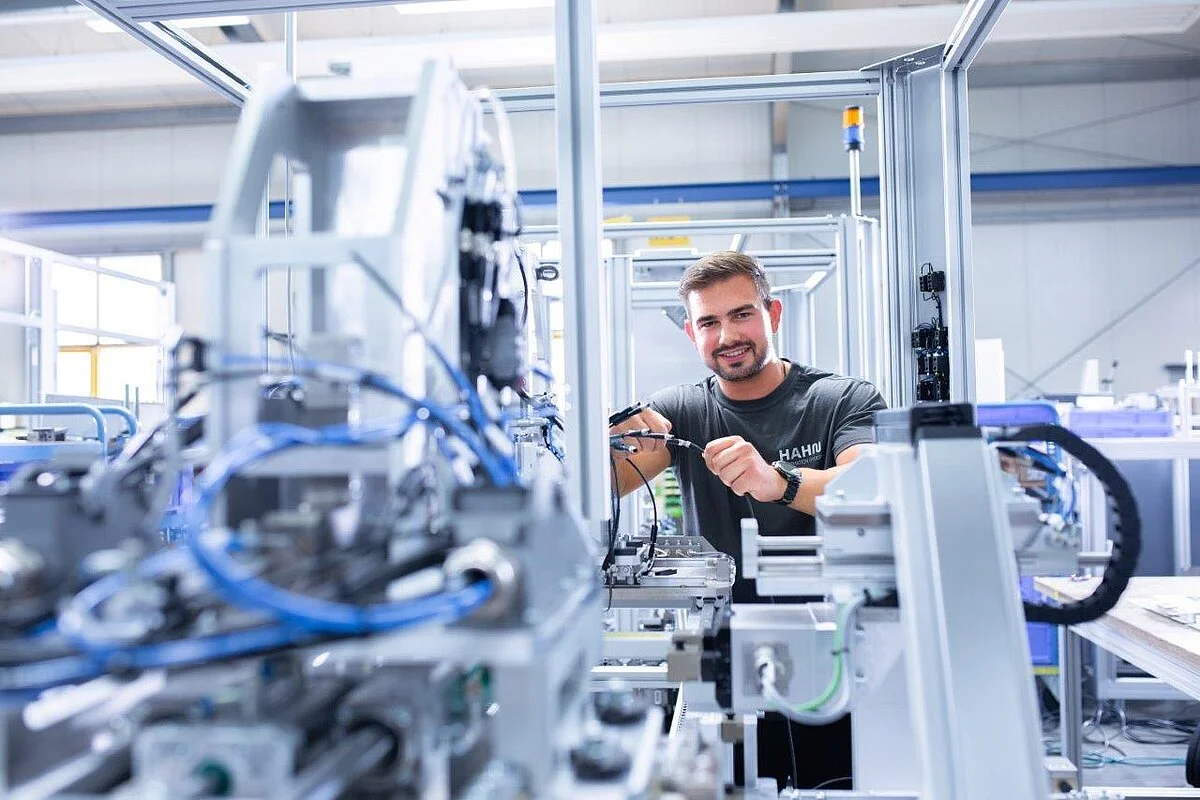
Germany’s manufacturing sector relies heavily on professionals who can work across mechanical, electrical and digital systems. This combination has made mechatronics an important technical occupation in industrial production, automation, machinery and other technology-driven sectors.
For international workers, Working as a Mechatronics Technician in Germany can provide access to a wide range of industrial environments. The occupation combines practical technical work with elements of electronics, mechanics, control systems and software. It is particularly relevant to companies that operate automated production lines, industrial robots and complex machinery.
The German Federal Employment Agency classifies Mechatroniker/in as a recognized vocational occupation with a standard dual training period of 3.5 years. Mechatronics technicians build, commission, maintain and repair complex mechatronic systems, including industrial robots and automated production equipment.
For international professionals, however, the route into this occupation can look different depending on whether they already have a technical qualification, want to complete vocational training in Germany, or have several years of professional experience.
What Does a Mechatronics Technician Do in Germany?
A mechatronics technician works with systems that combine mechanical components with electrical and electronic technologies.
The job can involve assembling equipment, testing components, identifying faults, installing software, commissioning machines and performing maintenance. According to the Federal Employment Agency, mechatronics technicians may work with industrial robots and automated production systems and use technical drawings and circuit diagrams when assembling and testing systems.
Typical responsibilities include:
- Installing mechanical and electrical components
- Assembling mechatronic systems
- Testing machines and equipment
- Programming or configuring technical systems
- Diagnosing technical faults
- Performing preventive maintenance
- Repairing damaged components
- Commissioning production equipment
- Reading technical drawings and circuit diagrams
- Supporting automated manufacturing processes
The exact responsibilities depend on the employer and specialization. Someone working in an automotive plant may have a different daily routine from a technician employed by an industrial automation company.
Where Do Mechatronics Technicians Work?
The occupation is particularly relevant to Germany’s industrial economy.
According to the Federal Employment Agency, mechatronics technicians can work in mechanical and plant engineering, automation technology, vehicle manufacturing, aerospace and medical technology. Their main workplaces can include workshops and production halls.
This creates several possible employment environments.
| Industry | Possible Responsibilities |
|---|---|
| Industrial Manufacturing | Machine installation and maintenance |
| Automation | Automated production systems |
| Automotive | Vehicle production and technical systems |
| Machinery | Assembly, testing and repair |
| Aerospace | Technical systems and components |
| Medical Technology | Maintenance and production equipment |
| Robotics | Installation and servicing of robotic systems |
The breadth of these sectors is one reason Working as a Mechatronics Technician in Germany can lead to different career directions rather than a single type of technical job.
Mechatronics Technician vs. Mechanical Technician
Mechatronics is broader than traditional mechanical maintenance because it combines several technical disciplines.
A mechanical technician may focus primarily on mechanical components, machinery and production equipment. A mechatronics technician also needs to understand electrical circuits, sensors, control systems and, in some roles, software.
| Area | Mechanical Focus | Mechatronics Focus |
|---|---|---|
| Mechanics | High | High |
| Electronics | Limited | High |
| Sensors | Basic or limited | Important |
| Automation | Varies | Important |
| Software | Usually limited | Increasingly relevant |
| Robotics | Specialized | Common area |
| Fault Diagnosis | Mechanical systems | Mechanical + electrical systems |
This interdisciplinary nature is particularly relevant in modern production environments where machines are increasingly connected and automated.
How Mechatronics Is Changing Through Industry 4.0
The occupation is changing as manufacturing becomes more digital.
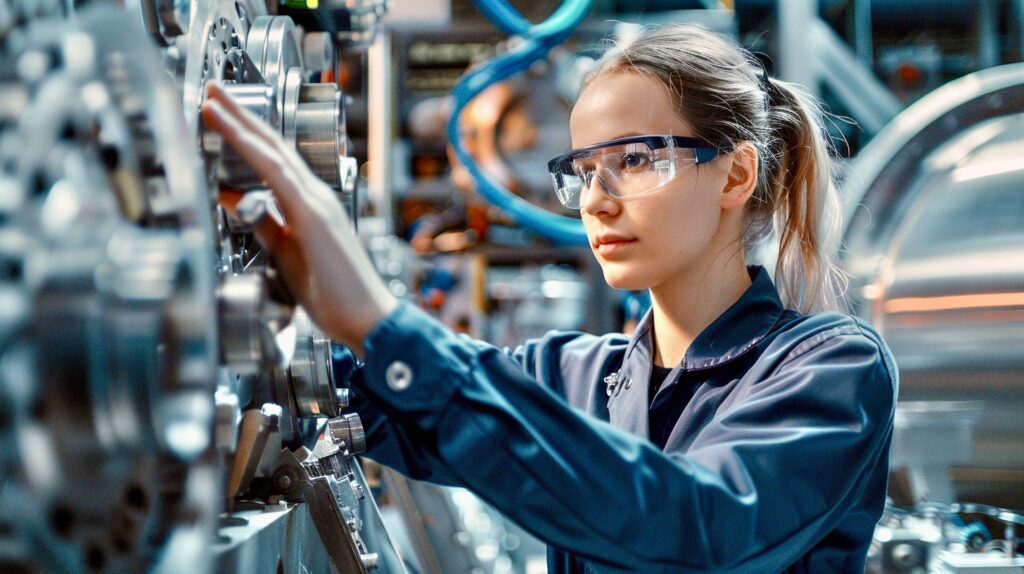
The Federal Employment Agency identifies technologies such as 3D printing, collaborative robots, connected production systems, embedded systems, sensors, machine data collection and predictive maintenance as areas associated with the digital development of the occupation.
This means that the modern mechatronics technician is not limited to assembling mechanical components.
A technician may increasingly interact with:
- Industrial robots
- Digital production systems
- Sensors
- Automated control systems
- Predictive maintenance technologies
- Connected machinery
- Computer-aided manufacturing
- Embedded systems
Professionals who develop these additional skills can broaden the types of positions they can target.
Qualifications for Mechatronics Technician Jobs in Germany
There are different ways to enter this occupation.
For people starting their careers in Germany, the standard route is the recognized dual vocational training program for Mechatroniker/in. The Federal Employment Agency lists the training duration as 3.5 years, with training taking place in both the company and vocational school.
Interestingly, German law does not prescribe one specific school qualification for starting this vocational training. In practice, however, applicants can have different educational backgrounds, and individual employers may set their own expectations.
International workers who already have a relevant qualification may instead need to examine recognition and immigration requirements rather than starting a new apprenticeship.
Vocational Training or Direct Employment?
For international applicants, this is one of the most important distinctions.
Someone without a recognized technical qualification may consider vocational training in Germany. Someone who already has a relevant qualification and professional experience may be able to pursue direct employment if they meet the applicable requirements.
| Situation | Potential Route |
|---|---|
| No relevant professional qualification | Vocational training |
| Relevant foreign vocational qualification | Qualification recognition/evaluation + employment |
| Several years of technical experience | Skilled employment pathway, depending on requirements |
| Existing German qualification | Direct job application |
| Strong technical profile | Specialized technician positions |
Germany’s official “Make it in Germany” portal provides information on vocational training requirements, including school qualifications, language skills and visa considerations. It also states that people with previous academic degrees or work experience can generally undertake vocational training, subject to the applicable requirements.
Language Requirements
German language ability can be important for mechatronics technicians.
The level required depends on the employer, workplace and position. International companies may use English in some technical departments, but technicians frequently need to communicate with colleagues, supervisors and other workers in production environments.
German can also be important when reading workplace instructions, safety documentation and technical procedures.
For someone planning Work Immigration to Germany, developing German skills before relocation can therefore be useful even when an advertised position mentions English.
Applicants considering vocational training should pay particular attention to the language requirements associated with their specific training program and immigration route.
Technical Skills Employers May Look For
A strong mechatronics candidate typically combines practical abilities with technical understanding.
Important skills can include:
| Skill | Application |
|---|---|
| Electrical systems | Wiring, testing and troubleshooting |
| Mechanical assembly | Building and installing equipment |
| Sensors | Monitoring and control |
| PLC knowledge | Industrial automation |
| Robotics | Automated production |
| Technical drawings | Assembly and maintenance |
| Fault diagnosis | Identifying equipment problems |
| Pneumatics | Industrial machinery |
| Hydraulics | Machinery and production systems |
| Preventive maintenance | Reducing equipment failures |
Not every vacancy requires all of these skills. Job descriptions should therefore be reviewed individually.
Salary for Mechatronics Technicians in Germany
Income varies according to experience, employer, region, qualifications and industry.
For workers in Germany’s electronic and metal industry, the official “Make it in Germany” portal reports an average gross monthly salary range of approximately €3,288 to €3,703 after vocational training, while emphasizing that pay depends on factors such as company size and federal state.
This figure should not be treated as a universal salary for every mechatronics technician. A worker in another sector or region can receive a different salary.
The main factors affecting earnings include:
- Professional experience
- Federal state
- Industry
- Collective agreement
- Company size
- Technical specialization
- Shift work
- Additional qualifications
Gross salary also differs from net salary because taxes and social security contributions are deducted from gross earnings.
Career Development for Mechatronics Technicians
A mechatronics career does not necessarily stop at the technician level.
With additional experience and qualifications, professionals can move toward more specialized or supervisory roles.
Potential directions include:
- Automation specialist
- Maintenance specialist
- Robotics technician
- Service technician
- Production technician
- Industrial automation technician
- Technical supervisor
- Mechatronics technician with advanced specialization
Germany also has further training routes. The Federal Employment Agency describes the “Techniker/in der Fachrichtung Mechatronik” as a further-training occupation, with training generally lasting two to four years depending on the full-time or part-time format. These technicians can work in areas such as industrial machinery, automation, vehicle manufacturing, medical technology and power engineering.
Mechatronics Technician Opportunities in the Automotive Industry
Germany’s automotive sector is one of the most relevant environments for technical professionals.
Mechatronics technicians can work with production machinery, automated assembly systems, diagnostic equipment and increasingly electrified vehicle technologies.
The automotive industry is also developing new technical requirements as manufacturers expand electric and hybrid vehicle production.
For technicians interested in this area, additional knowledge of high-voltage systems, electronics, diagnostics and automated manufacturing can be useful. The Federal Employment Agency separately identifies vehicle mechatronics occupations focused on system and high-voltage technology, including work on electric and hybrid drive systems.
Finding Mechatronics Jobs in Germany
International applicants can search for positions through official employment platforms and individual company career pages.
The German government’s “Make it in Germany” portal provides a job exchange containing vacancies and vocational training opportunities and specifically allows applicants to search by occupation, skills or company.
The same official portal explains that international applicants can organize their job search and visa process themselves and that using a recruitment agency is not a mandatory requirement for working in Germany.
Useful search terms include:
- Mechatroniker
- Mechatronics Technician
- Industriemechatroniker
- Servicetechniker Mechatronik
- Instandhaltungstechniker
- Automatisierungstechniker
- Mechatroniker Produktion
Searching with German job titles can be particularly useful because many vacancies are published in German even when employers are open to international applicants.
How to Apply for Mechatronics Jobs
A German-style application normally needs to present technical experience clearly.
International applicants should prepare:
- A structured CV
- Relevant vocational or academic certificates
- Employment references where available
- Language certificates if applicable
- Evidence of professional qualifications
- A short cover letter when requested
Technical experience should be described with specific equipment and systems rather than generic statements.
For example, mentioning PLC systems, industrial robots, pneumatic equipment, electrical troubleshooting or preventive maintenance can make a CV more informative than simply stating “maintenance experience.”
Recognition of Foreign Qualifications
Applicants who obtained their technical qualifications outside Germany should check whether formal recognition is required for their intended immigration or employment route.
Recognition requirements can depend on the occupation, qualification and immigration pathway.
Applicants should therefore avoid assuming that every foreign technical certificate will automatically be treated in exactly the same way as a German qualification.
The official German recognition system can be used to identify the competent authority and understand the relevant procedure for a foreign qualification.
Work Immigration Options
Qualified foreign technicians may have several possible immigration routes depending on their qualifications, job offer and personal circumstances.
Potential routes can include skilled-worker residence pathways or other options available under Germany’s current immigration framework.
The correct route depends on factors such as:
- Qualification
- Qualification recognition
- Job offer
- Salary
- Age
- Professional experience
- Language ability
- Nationality
Applicants should evaluate the immigration route separately from the employment search. Receiving a job offer does not mean that every applicant automatically qualifies for the same residence permit.
The official “Make it in Germany” portal provides a Quick-Check and information covering jobs, recognition of foreign qualifications, visas and entry procedures.
Can International Workers Work as Mechatronics Technicians?
Yes, international workers can pursue mechatronics positions in Germany if they meet the applicable professional and immigration requirements.
The route is different depending on whether the applicant is already a qualified technician or is seeking vocational training.
For experienced professionals, the first step is generally to identify suitable vacancies and determine whether their qualification and professional background meet the requirements of the position and immigration route.
For younger applicants or people without a relevant qualification, vocational training can provide another route into the German technical labor market.
Advantages and Challenges of the Occupation
Working as a mechatronics technician can provide exposure to several areas of modern industry.
Potential advantages include:
- Work in different industrial sectors
- Opportunities to specialize
- Practical technical responsibilities
- Exposure to automation and robotics
- Possibility of further professional training
- Career progression into specialized technical roles
At the same time, the occupation can involve challenges such as shift work, physically demanding tasks, working in production environments and the need to continuously update technical skills.
Language can also be a challenge for international workers, particularly in workplaces where most communication takes place in German.
Frequently Asked Questions
Is mechatronics a good career in Germany?
Mechatronics is an established technical occupation in Germany and is used across manufacturing, automation, vehicle production, aerospace and medical technology. The Federal Employment Agency recognizes Mechatroniker/in as a formal vocational occupation.
How long is mechatronics training in Germany?
The recognized dual vocational training for Mechatroniker/in normally lasts 3.5 years. Training combines practical work in a company with vocational-school education.
Can foreigners become mechatronics technicians in Germany?
Yes. Foreign applicants can pursue employment or vocational training depending on their qualifications, experience and immigration eligibility.
How much does a mechatronics technician earn in Germany?
Salary depends on the industry, region, experience and employer. The official Make it in Germany portal gives an average gross monthly range of €3,288–€3,703 for skilled workers in the electronic and metal industry after vocational training, but this is not a universal salary for every mechatronics technician.
Do I need German to work as a mechatronics technician?
German ability is often useful and may be required by individual employers or training programs. The exact requirement depends on the position and immigration route.
Can I work in Germany with a foreign mechatronics qualification?
Potentially, but the treatment of a foreign qualification depends on the occupation and immigration pathway. Applicants should check the official recognition requirements before relying on their qualification for immigration purposes.
Which industries hire mechatronics technicians?
Major areas include machinery and plant engineering, automation, automotive manufacturing, aerospace and medical technology.
Can a mechatronics technician move into automation?
Yes. Automation is closely connected with mechatronics, and the German occupation profile includes automated production systems, sensors, industrial robots and connected manufacturing technologies.
Can I find mechatronics jobs before moving to Germany?
Yes. The official Make it in Germany job exchange includes vacancies from the Federal Employment Agency and is designed to help international applicants search for employment and training opportunities.
Is mechatronics the same as mechanical engineering?
No. Mechatronics combines mechanical, electrical and electronic systems and often includes automation and software-related technologies. Mechanical engineering has a broader focus on mechanical systems and engineering design.
How Homa Immigration Institute Can Help
For international professionals, finding a position is only one part of the relocation process. Qualification assessment, job applications, employment documentation and the appropriate immigration pathway all need to be considered together.
Homa Immigration Institute can assist applicants who are considering Work Immigration to Germany by reviewing their professional background, helping them understand available pathways and preparing for the documentation and application stages.
Applicants should nevertheless verify current visa and qualification requirements through official German authorities before submitting an immigration application.
Conclusion
Working as a Mechatronics Technician in Germany can involve much more than traditional mechanical maintenance. The occupation combines mechanics, electronics, automation and digital technologies and is used across several important German industries.
The standard Mechatroniker/in occupation is a recognized 3.5-year dual vocational training profession, while experienced international technicians may have different routes depending on their existing qualifications and professional background.
For international applicants, technical skills are only one part of the process. German language ability, qualification recognition, practical experience and an appropriate immigration pathway can all influence the route into employment.
As German manufacturing continues to adopt robotics, connected production systems, sensors and predictive maintenance, mechatronics professionals are increasingly working at the intersection of mechanical systems and digital production technologies.
Sources
- Federal Employment Agency – BERUFENET: Mechatronics Technician (Mechatroniker/in)
- Federal Employment Agency – Mechatronics Technician: Official Occupational Profile
- Make it in Germany – Vocational Training in the Electronic and Metal Industry
- Make it in Germany – Requirements for Vocational Training
- Make it in Germany – Visa for Vocational Training
- Make it in Germany – Job Listings in Germany
- Make it in Germany – Looking for a Job in Germany
- Federal Employment Agency – Mechatronics Technician: Tasks and Working Environment


