
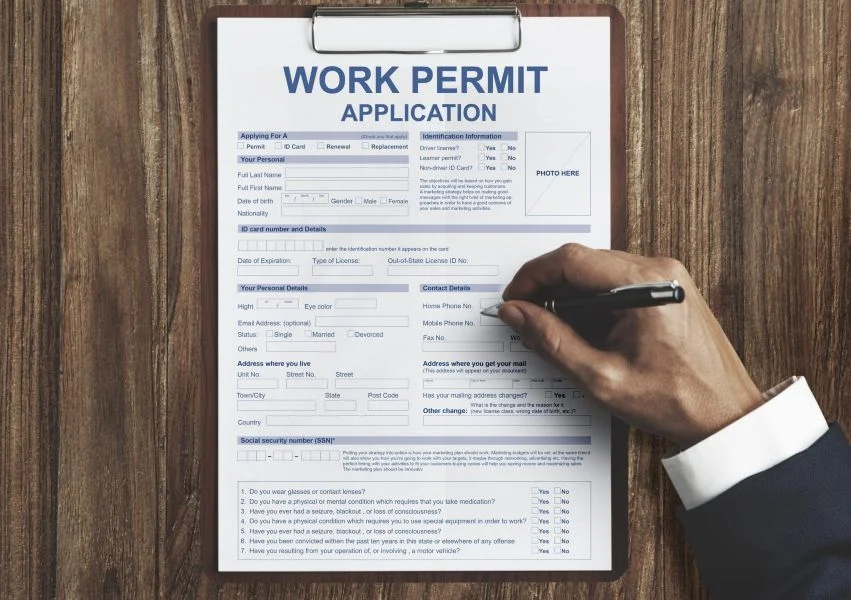
Working in Turkey can be an attractive option for foreign professionals who want to build an international career in a growing regional economy. However, securing a job offer is only one part of the process. Foreign nationals generally need the appropriate work authorization before they can legally begin employment in Turkey.
Understanding the documents required for a Turkey Work Visa is therefore an essential part of preparing for employment in the country. The application normally involves both the foreign worker and the Turkish employer, and the exact documents can vary depending on the applicant’s profession, employment conditions, nationality, and whether the application is submitted from inside or outside Turkey.
A Turkey Work Visa should also be distinguished from a tourist or e-Visa. Turkey’s Ministry of Foreign Affairs states that work and study purposes require a regular visa obtained through Turkish embassies or consulates rather than an e-Visa intended for tourism or commerce.
This guide explains the main documents, application stages, employer responsibilities, processing considerations, and common mistakes that foreign professionals should understand before applying for a Turkey Work Visa in 2026.
What Is a Turkey Work Visa?
A Turkey Work Visa is the visa route used by a foreign national who intends to enter Turkey for employment after obtaining the necessary work authorization. The work permit itself is issued by the Turkish Ministry of Labour and Social Security and, for the relevant categories, provides the foreigner with the right to work and reside in Turkey during its validity period.
The process is therefore closely connected to the work permit application. A person cannot generally enter Turkey on a tourist visa and simply start working for a Turkish employer. Foreigners covered by the International Labour Force Law must obtain a work permit or applicable work permit exemption before starting employment.
For applicants planning Work Immigration, understanding the difference between the entry visa and work authorization is especially important.
9 Essential Documents for a Turkey Work Visa
The documentation required for a Turkey Work Visa can vary depending on the applicant and the position. However, several documents are central to the standard application process.
| Document | Applicant or Employer | Main Purpose |
|---|---|---|
| Valid Passport | Applicant | Identification and travel |
| Work Visa Application | Applicant | Formal visa request |
| Employment Contract | Both | Proof of employment |
| Employer Letter | Employer | Confirms job and employment details |
| Diploma | Applicant | Evidence of education |
| Biometric Photograph | Applicant | Official identification |
| Work Permit Application | Employer/Applicant | Employment authorization |
| Employer Documents | Employer | Demonstrates company status |
| Profession-Specific Documents | Applicant/Employer | Required for regulated positions |
Not every applicant will need every document in exactly the same format. Turkish authorities can request additional information or documentation depending on the circumstances of the application.
1. Valid Passport
A valid passport is one of the most important documents in a Turkey Work Visa application. Applicants should make sure that their passport is valid and that the personal information matches the information provided throughout the application.
The Turkish Ministry of Labour also notes that work permit approval cannot extend beyond a period of 60 days before the expiry date of the passport. Applications submitted with passports or substitute travel documents having less than 60 days of validity at the time of application are not processed.
Foreign nationals whose passports are not written in Latin letters may also need a translation certified by a sworn translator or the relevant official authorities.
For this reason, checking passport validity before beginning the application can help prevent unnecessary delays.
2. Employment Contract
An employment contract is a central part of the work permit process. The Turkish Ministry of Labour states that an employment contract signed by both the employer and foreign worker is among the documents submitted electronically during the application process.
The contract should clearly establish the employment relationship and provide relevant information about the position and working conditions.
Foreign professionals should carefully review the contract before signing it. Important elements can include job title, salary, working hours, employer information, employment location, and other conditions.
A genuine employment relationship is particularly important because the work permit application is linked to the employer and the proposed position.
3. Employer Letter
A letter from the Turkish employer may also be required as part of the visa application. According to the Turkish Ministry of Foreign Affairs, applicants applying for a work visa through a Turkish diplomatic mission need their passport, visa application form, and a letter from their employer for the consular stage.
The employer letter should clearly explain the employment purpose and provide relevant details about the job.
The information in the employer letter should be consistent with the employment contract and work permit application. Differences between documents can lead to requests for clarification and potentially slow down the process.
4. Diploma or Temporary Graduation Certificate
Educational documentation can be required for foreign workers, particularly when the position falls within professional services or professions for which the Ministry requires proof of qualifications.
The Ministry of Labour states that a copy of the diploma or temporary graduation certificate, accompanied by a certified Turkish translation where required, may need to be uploaded during the electronic work permit application. The diploma is compulsory for foreigners working within vocational services and certain professions identified by the Ministry.
Applicants should therefore prepare their educational documents in advance.
Depending on the profession, additional professional certificates, licenses, or qualification documents may also be relevant.
5. Biometric Photograph
A biometric photograph is another important document in the work permit process.
The Turkish Ministry of Labour specifies that the photograph uploaded to the e-permit system should be a recent color photograph with the applicant facing forward, with the face clearly visible and a white background.
Applicants should make sure that the photograph complies with the technical requirements rather than simply uploading an old passport photograph.
Using a photograph that meets the official specifications can help avoid technical problems during the electronic application.
6. Work Permit Application
The Turkey Work Visa process is closely connected to the work permit application. Depending on the applicant’s circumstances, the process can begin from abroad or inside Turkey.
For an application from abroad, the foreigner first applies personally at the relevant Turkish embassy or consulate in the country of nationality or legal residence. The diplomatic mission provides a reference number, which must then be given to the employer in Turkey. The employer subsequently submits the work permit application through the relevant electronic system.
This means that the foreign worker and employer have different responsibilities during the application.
For applicants already in Turkey, a domestic work permit application can generally be made when the foreigner has a valid Turkish residence permit issued for at least six months, subject to the applicable rules and exceptions.
7. Employer Documents
The employer also has to provide documents as part of the work permit process. The application is therefore not simply a personal visa application completed by the foreign employee.
Official Turkish guidance lists company-related documents among the materials that may be required from employers. These can include corporate registration and financial documentation, depending on the application and employer.
The employer’s eligibility and the employment conditions are considered during the evaluation of the application.
This is one reason why foreign workers should communicate closely with their prospective employer during the process. A candidate may have all personal documents prepared correctly, but the application can still be affected if the employer fails to provide the required documentation.
8. Profession-Specific Documents
Some occupations require additional documents beyond the standard application package.
For example, the Ministry of Labour identifies specific documentation requirements for certain sectors and professions. Health professionals may need documentation from the relevant health authorities, while education professionals can be subject to additional requirements. Tourism businesses and other specialized sectors can also have specific documentation requirements.
Applicants should therefore avoid assuming that the standard list applies identically to every occupation.
If you are applying for a regulated profession, checking the requirements before submitting your Turkey Work Visa application is particularly important.
9. Additional Supporting Documents
Depending on the application, authorities may request additional supporting documentation. This can include evidence related to education, professional experience, employment, or the specific nature of the job.
The Turkish Ministry of Labour evaluates applications according to established work permit evaluation criteria and international labour force policy. Complete applications are generally evaluated within 30 days, provided that the information and documents are complete; if additional information or documents are requested, the period is calculated from the date those materials are uploaded.
Applicants should therefore keep copies of all documents submitted and be prepared to provide additional evidence if requested.
Turkey Work Visa Documents: Applicant vs Employer
One of the most important points foreign professionals should understand is that the process involves both parties.
| Applicant’s Responsibilities | Employer’s Responsibilities |
|---|---|
| Provide valid passport | Submit company documents |
| Complete consular application | Submit work permit application |
| Provide photograph | Provide employment information |
| Provide diploma where required | Upload required corporate documents |
| Sign employment contract | Follow electronic application procedures |
| Attend the relevant Turkish mission | Support the work permit process |
The exact division of responsibilities can vary according to the application route and individual circumstances.
How to Apply for a Turkey Work Visa from Abroad
Foreign professionals applying from outside Turkey generally follow a two-stage process.
First, the applicant submits the required application at the relevant Turkish embassy or consulate. The applicant receives a reference number associated with the application.
The employer in Turkey then uses this reference number to submit the work permit application through the electronic system. The Ministry of Labour evaluates the application and determines whether the work permit can be granted.
If the work permit is approved, the applicant must complete the relevant fee and visa procedures through the Turkish diplomatic mission. The Ministry of Foreign Affairs explains that the applicant may be required to pay the entry visa fee, work permit certificate fee, and applicable residence-related fee.
How Long Does the Turkey Work Visa Process Take?
Processing time depends on the completeness of the application and the specific circumstances of the applicant.
The Ministry of Labour states that properly completed work permit applications are evaluated within 30 days. This period can be affected if additional information or documentation is requested.
The applicant should also consider the time required for the consular stage, document preparation, translations, and any additional procedures required for the specific profession.
For this reason, foreign workers should avoid making travel or employment plans based solely on an estimated processing period.
What Happens After Work Permit Approval?
Once the work permit is approved for an application made from abroad, the foreigner must complete the relevant visa and fee procedures at the Turkish diplomatic mission.
After the work visa is issued, the applicant can enter Turkey for employment. According to the Ministry of Labour, foreign applicants entering Turkey through the work visa route must fulfill the relevant obligations and begin working within the applicable period. The ministry also states that foreign workers entering with a work visa must register their address within 20 days of entry.
The work permit card itself is issued by the Ministry and, for the applicable categories, serves as both work authorization and residence authorization during its validity period.
Common Mistakes in Turkey Work Visa Applications
One of the most common mistakes is submitting inconsistent information across different documents. The applicant’s name, employer information, job title, and other important details should be consistent wherever they appear.
Another common issue is failing to check passport validity. Because the Ministry applies specific passport-validity rules to work permit applications, this should be reviewed before submission.
Applicants should also avoid assuming that a tourist or e-Visa can be used for employment. The Turkish Ministry of Foreign Affairs clearly distinguishes work purposes from tourism and commerce and states that work purposes require the appropriate regular visa route.
Finally, applicants should not rely on old document checklists because requirements can change or vary by profession.
Turkey Work Visa Fees in 2026
Applicants should also budget for government fees associated with the work authorization process.
The Ministry of Labour publishes annual work permit and work permit exemption fees. For 2026, the applicable fees were established under the relevant fees legislation and became effective from January 1, 2026. Approved applications can be subject to both work permit and valuable paper fees, and failure to pay the required amounts within the specified period can result in rejection.
In addition to government fees, applicants may need to budget for document translation, certification, travel to the consulate, and other administrative expenses.
Can Homa Help With a Turkey Work Visa?
Preparing a Turkey Work Visa application requires coordination between the foreign employee, Turkish employer, consular authorities, and the Ministry of Labour.
For applicants who are unfamiliar with Turkish immigration procedures, professional assistance can make it easier to identify the correct application route, prepare supporting documentation, and understand the relationship between Work Immigration, employment authorization, and Visa Application procedures.
Homa Immigration Agency can assist foreign applicants in evaluating their immigration options and preparing for the relevant stages of the process. However, applicants should always verify current official requirements before submitting their documents because immigration procedures and fees can change.
Final Checklist for a Turkey Work Visa Application
Before submitting a Turkey Work Visa application, foreign professionals should review their documents carefully.
| Checklist | Status |
|---|---|
| Valid passport | ✓ |
| Visa application form | ✓ |
| Employer letter | ✓ |
| Signed employment contract | ✓ |
| Biometric photograph | ✓ |
| Diploma or relevant qualification | ✓ |
| Work permit application | ✓ |
| Employer’s corporate documents | ✓ |
| Profession-specific documents, if applicable | ✓ |
| Certified Turkish translations, where required | ✓ |
A complete checklist can reduce the risk of delays, but the exact requirements should always be confirmed according to the applicant’s nationality, profession, employer, and application route.
Final Thoughts
Applying for a Turkey Work Visa involves more than submitting a passport and receiving a visa. The process is closely connected to the Turkish work permit system, and both the foreign professional and employer have important responsibilities.
The most important documents commonly include a valid passport, employment contract, employer letter, biometric photograph, diploma or relevant qualification documents, and the documentation required for the work permit application. Additional documents may be required for regulated professions and specific industries.
Foreign professionals planning Work Immigration to Turkey should begin preparing their documents as early as possible and make sure that translations, certifications, employment information, and passport details are accurate and consistent.
Because official requirements can change, applicants should use current information from the Turkish Ministry of Labour and Social Security and the Ministry of Foreign Affairs when preparing their application. With proper preparation and an appropriate employment offer, the Turkey Work Visa process can become considerably more manageable.
Sources
- Ministry of Labour and Social Security of Türkiye – Work Permit
- Ministry of Labour and Social Security – Required Documents for Work Permit Evaluation
- Ministry of Foreign Affairs of Türkiye – General Information About Turkish Visas
- Ministry of Labour and Social Security – Work Permit Fees and Valuable Paper Fee
- Ministry of Labour and Social Security – Documents Issued to Foreigners
- Ministry of Foreign Affairs of Türkiye – Consular Information
- Republic of Türkiye – e-Visa Official Portal


